
Drywall is all we do — and that is the point
Most contractors do drywall as a side task between bigger jobs. We do it every day. Hanging, taping, mudding, sanding, texturing — that is the whole business. When a crew does one trade all day, the seams disappear and the walls come out flat.
We serve Waldorf and Charles County, Maryland: new installation, repairs, taping and finishing, texture, and popcorn ceiling removal. One call, one crew, smooth walls.
What we do
Drywall installation
New rooms, finished basements, additions, garage conversions — we hang the board, tape the seams, and finish it to paint-ready smooth. See drywall installation.
Drywall repair
Holes from doorknobs, cracks along seams, dents, nail pops, water stains. Most repairs take two short visits. See drywall repair.
Taping and finishing
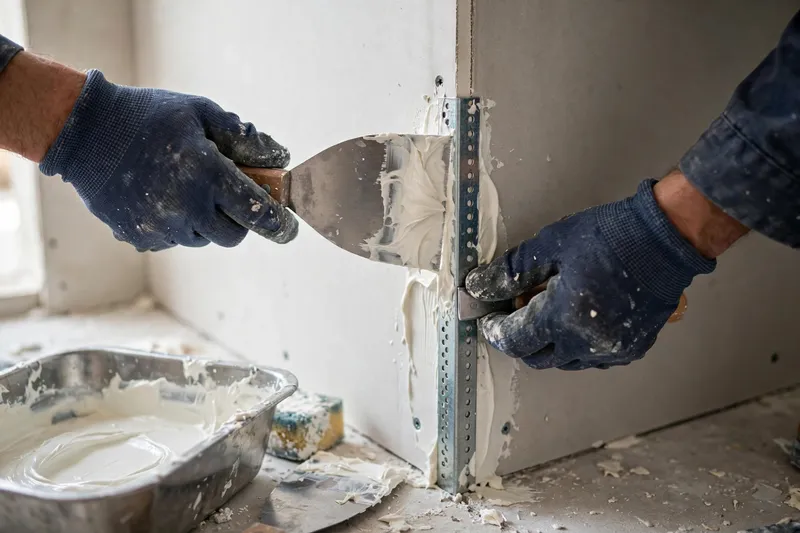
The step that decides whether walls look good or not. We tape, coat, and sand to a flat finish that takes paint evenly. See taping and finishing.
Texture and popcorn removal
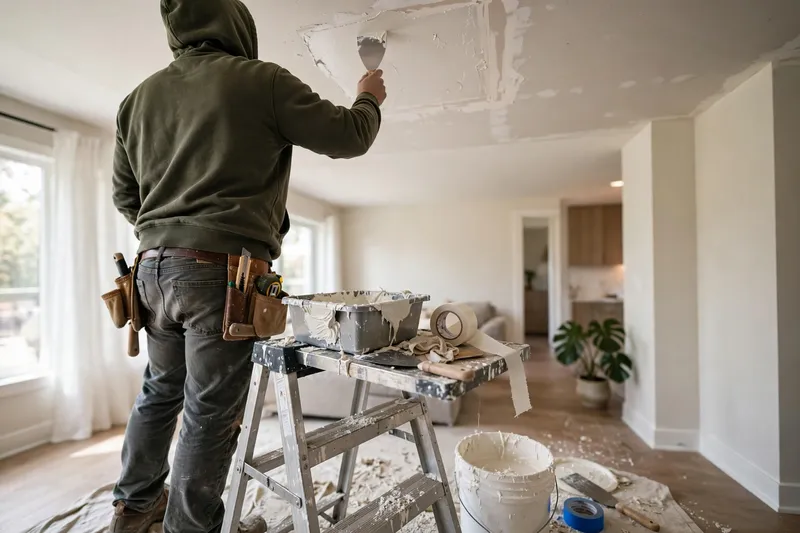
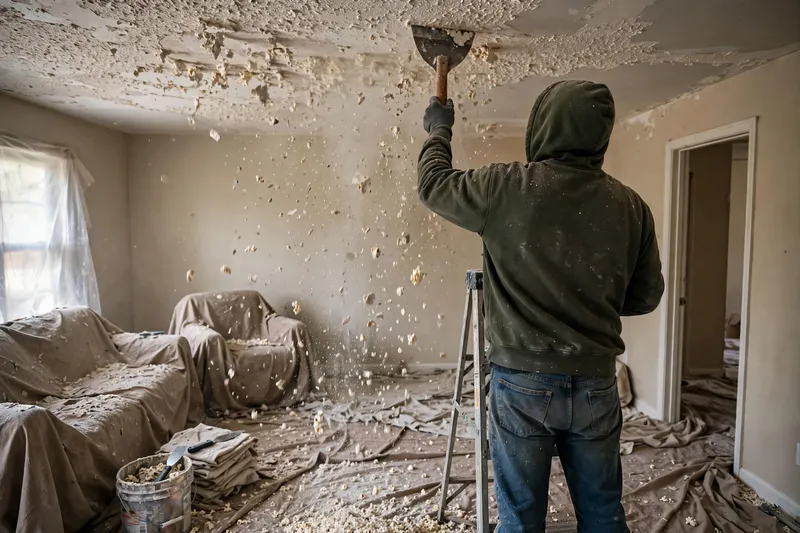
Orange peel, knockdown, or smooth — and we scrape off dated popcorn ceilings and refinish them flat. See drywall texturing and popcorn ceiling removal.
Water damage and ceilings
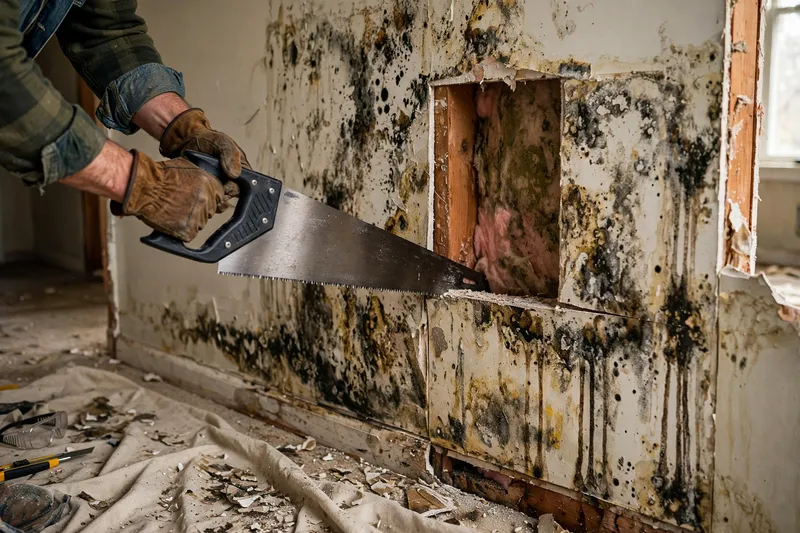
Wet drywall has to come out — patching over it just hides mold food. We cut it out, check behind it, and rebuild it right. See water damage drywall repair and ceiling repair.
Why the finish matters more than the board
Here is something most homeowners learn the hard way: the drywall panels are the cheap part. The finish is the job. Two crews can hang the same board, and one wall will look like glass while the other shows every seam under the paint.
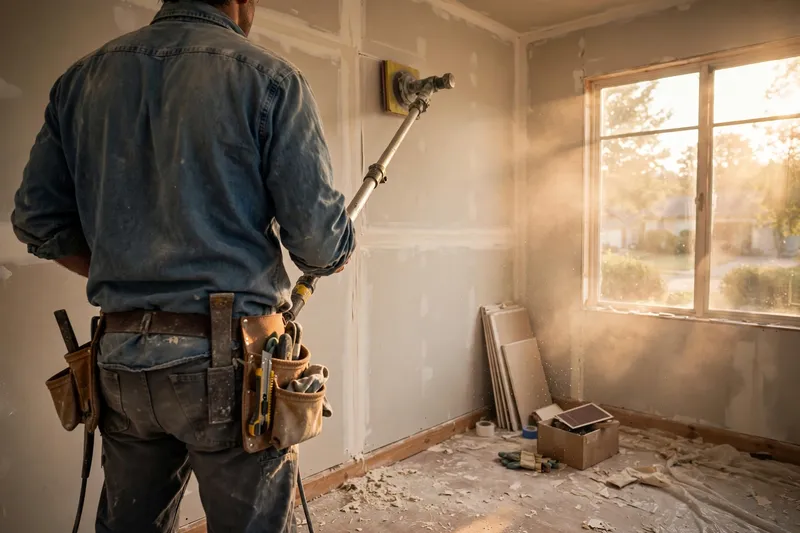
The difference is in the mud work — how the tape is bedded, how many coats go on, how carefully each coat is sanded, and whether the final sanding is done with a light held at an angle so flaws show up before the paint does. We do all of that. It takes longer. It is the reason our walls disappear and cheap work does not.
There are five standard finish levels in the trade, from Level 0 (bare board, temporary) to Level 5 (skim-coated glass-smooth). Most homes want Level 4 — smooth enough that paint looks even. We explain drywall finishing levels in plain English so you know what you are paying for.
The problems we fix every week
- Holes. Doorknob holes, furniture dents, the occasional accident. Patched, taped, textured to match — gone.
- Cracks. Hairline cracks along seams or corners, usually from the house settling. We re-tape them properly so they do not come back.
- Water stains. Brown rings on ceilings from a past leak. If the board is solid and dry, we seal and refinish. If it stayed wet, it comes out.
- Nail pops. Little bumps where fasteners push through. Common in newer homes. We re-fasten and refinish the spots.
- Bad previous work. Visible seams, crooked corners, texture that does not match. We skim and refinish over it.
If you are seeing any of these, our signs you need drywall repair guide walks through what each one means.
New drywall: what a real job looks like
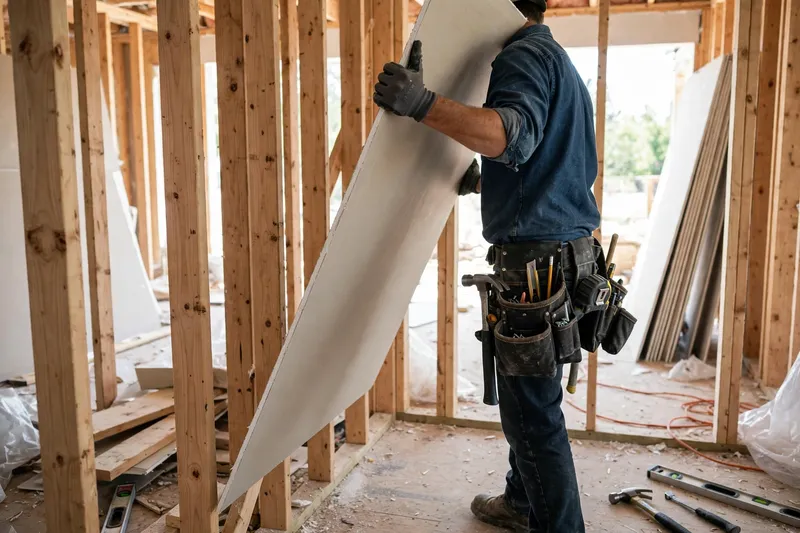
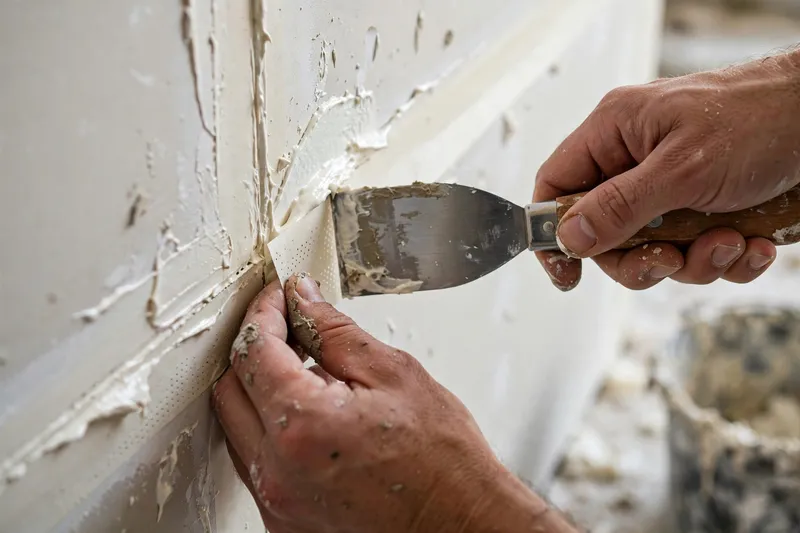
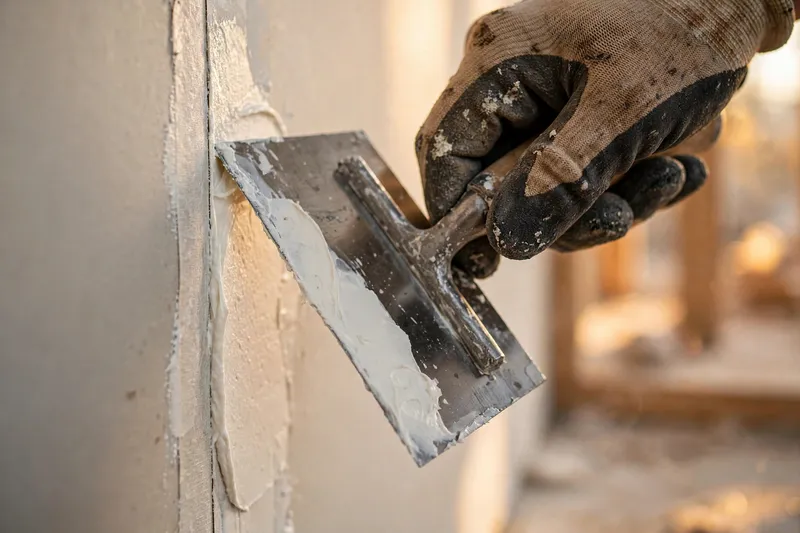
A proper installation runs in order: hang the board, tape the seams, three coats of mud (each one wider than the last), sand between coats, texture if you want it, and a final check with angled light. Rushing the drying between coats is how you get cracks later — mud shrinks as it dries, and each coat needs its turn.
For basements and bathrooms, the board itself changes: moisture-resistant panels and the right gap detailing at the floor. Regular board in a damp basement is a mold problem waiting to happen. See basement drywall and our guide to types of drywall.
Wondering about timing? Our timeline guide lays out how long each kind of job really takes — and why.
What affects the price
Four things move the number: how much wall is involved, what condition it is in, what finish level you want, and how much repair-versus-new work the job mixes. A single patched hole and a whole-house hang are different universes, and most jobs fall somewhere between.
Nationally, homeowners often see small repairs in the low hundreds and full-room hang-and-finish work in the low thousands — but your walls decide your number, not a national average.
A note on prices: material and labor costs move up and down, and no two jobs need the same work. Treat any numbers on this page as starting points, not quotes. Your written estimate after our free visit is the real number for your project.
Our drywall cost guide breaks down what drives the price, and our cost calculator gives you a rough starting point from your room dimensions.
Texture: the look of your walls
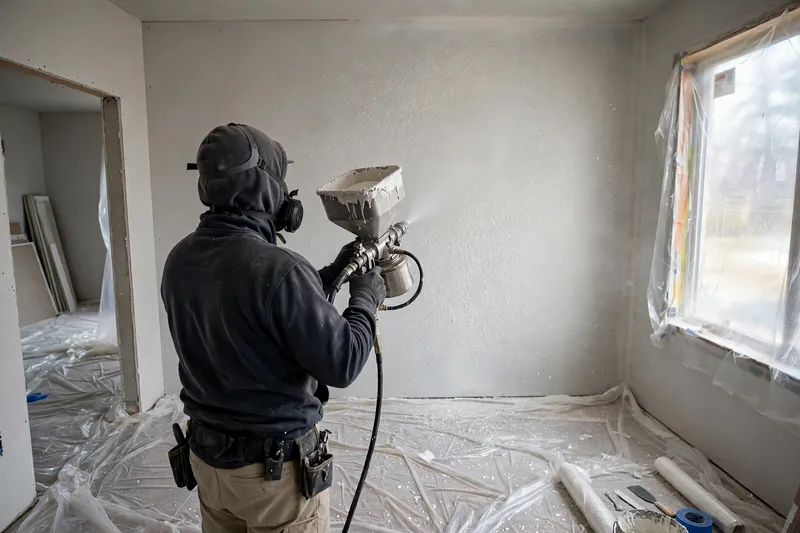
After the mud work comes the surface you actually see. Smooth walls are the modern standard — clean, and they show off paint color best. Orange peel adds a subtle dimpled texture that hides minor flaws. Knockdown is bolder, with a flattened stucco-like pattern common in many Maryland homes.
The rule that matters: match what is already there. A smooth patch in the middle of an orange-peel wall will flash like a sign. We match your existing texture so repairs vanish. Full detail at drywall texturing.
Where we work
We are based in Waldorf and work across Charles County: La Plata, White Plains, St. Charles, Bryans Road, Indian Head, Hughesville, Port Tobacco, and the surrounding towns. See the full list on our service areas page — every town gets its own page with local notes.
The work, up close
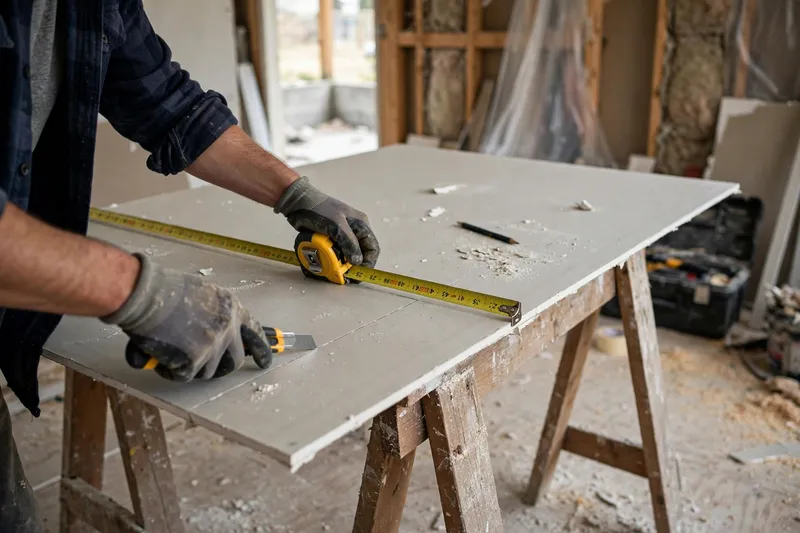
Drywall is a process: hang it straight, tape it tight, mud it wide, sand it smooth. Here is what each step looks like. Photos show typical drywall work, not specific job sites.

How it starts
Call (240) 213-2890 or send the form. Tell us what is wrong — a hole, a crack, a stain, a room that needs hanging. We come look, free. You get a written price. Then smooth walls.
Check it yourself — or skip the homework
Do not take our word for any of this. Look at our work areas, read the guides, and compare us against any other drywall crew in Charles County.
Or skip the homework: call (240) 213-2890 and we will come look at your walls free and give you a written price — before you spend a dollar.